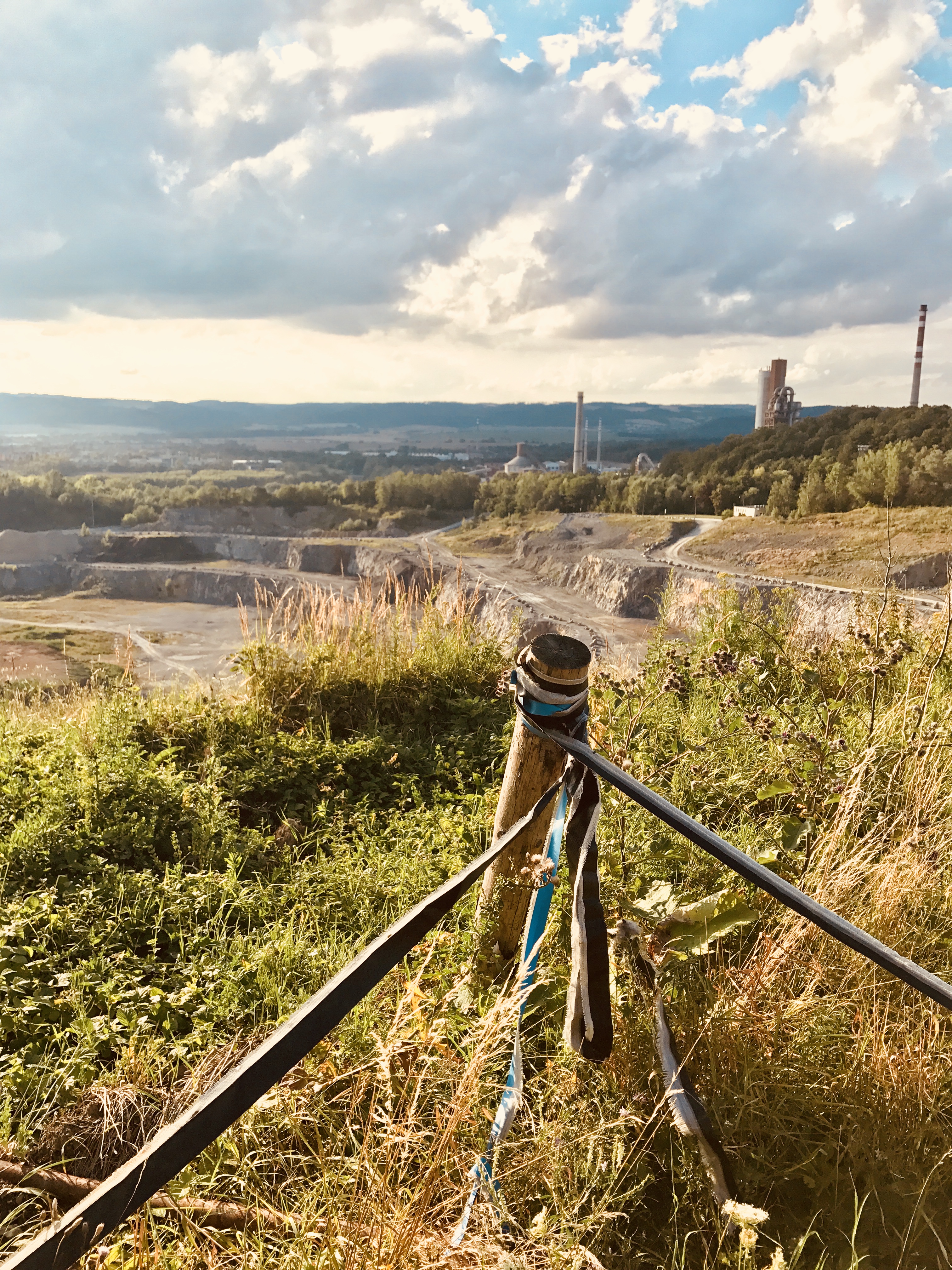
Stone Types Commonly Quarried in Canada
The Canadian Shield, which covers roughly 4.8 million square kilometres of the country's interior, is one of the world's largest exposed areas of Precambrian rock. This geography produces a concentrated supply of granite in Quebec and Ontario, limestone across the Great Lakes corridor, and sandstone in the prairie provinces and Nova Scotia.
Granite quarried near Quebec City — particularly the grey-pink varieties from the Laurentian Highlands — has been used in foundation construction and paving across the province since the 1800s. Ontario's limestone belt, running through the Kingston and Ottawa Valley regions, provides a fine-grained sedimentary stone that cuts cleanly and carries low moisture absorption, making it suitable for sills, lintels, and cladding.
In British Columbia, the availability shifts toward metamorphic stone: slate from the Interior and certain granites from the Coast Mountains. These are quarried in smaller volumes than Eastern Canadian stone, which affects price and lead times.
How Quarry Grading Works
Stone coming out of a quarry is typically sorted into grades based on visual and structural criteria. The naming conventions vary by quarry and stone type, but a common three-tier system applies to dimensional stone:
- Select or First Quality: Minimal colour variation, no visible cracks or inclusions, consistent face dimensions within tight tolerances. Used for exposed architectural elements, countertops, and feature walls.
- Standard or Commercial: Moderate colour range, minor surface marks acceptable, dimensions within broader tolerances. Typical for retaining walls, paving, and general cladding.
- Utility or Building Grade: Irregular shapes, variable surface condition, often sold by weight rather than piece count. Suitable for rubble-fill, dry-stack retaining walls, or where stone is largely hidden.
When purchasing through a quarry direct or a masonry yard, confirming which grade applies to the quoted material prevents disputes at delivery. A quarry's published specification sheet will note the tolerances for each grade in millimetres.
Evaluating Regional Suppliers
Most quarries in Canada do not sell directly to homeowners for small orders. The typical supply chain runs: quarry → stone yard or landscape supply depot → contractor or direct purchase. For residential projects under roughly 20 tonnes, working through a stone yard is usually the practical route.
When assessing a stone yard, three things are worth checking before committing to an order:
- Quarry of origin: A reputable yard will confirm the source quarry and province. This matters for frost resistance — some imported stones have higher water absorption rates than domestic varieties tested under Canadian freeze-thaw conditions.
- Sample inspection: Request a sample of the actual stock on hand, not a catalogue photograph. Colour range and surface texture vary significantly between quarry runs and between material photographed in dry versus wet conditions.
- Delivery logistics: Stone is dense. A cubic metre of granite weighs approximately 2.7 tonnes. Confirm the delivery vehicle and whether it can reach the site, and factor in unloading — most suppliers will drop material at the property line rather than distribute it across a yard.
Frost Resistance and Canadian Climate Considerations
The primary technical concern with stone selection for Canadian exteriors is freeze-thaw durability. Stone with high porosity absorbs water, which expands when it freezes and accelerates surface spalling over multiple winter cycles.
The relevant metric is water absorption by weight, typically measured per ASTM C97 or CSA A23.2 standards. For exterior use in climate zones with more than 40 freeze-thaw cycles per year — which includes most of Canada outside of coastal British Columbia — stone should have an absorption rate below 0.75% by weight for granite and below 3% for limestone. Sandstone varies significantly by source and should be tested on a lot-by-lot basis if being used in exposed applications.
The Environment and Climate Change Canada climate data portal provides regional freeze-thaw cycle counts that are useful when specifying stone for exterior steps, coping, or paving.
Fieldstone as an Alternative
In rural Ontario, Quebec, and the Maritimes, fieldstone gathered from agricultural land remains a practical option for retaining walls, garden features, and foundation skirts. The stones are typically mixed glacial deposits — granite, gneiss, and quartzite in varying proportions — and are available from farmers and land clearers who need to move material.
The trade-off compared to quarried stone is consistency. Fieldstone arrives in highly variable sizes and shapes, which requires more skill and time in laying. For structural retaining walls, the irregular bearing surfaces also demand more attention to batter (backward lean) and drainage than a quarried dimensional stone would.
Key Takeaways
- Confirm stone grade in writing before purchase; tolerances vary significantly between grades.
- Check water absorption data, not just appearance, for any stone going into an exterior application in a freeze-thaw climate.
- For orders under 20 tonnes, a stone yard is typically the most accessible route; ask for the quarry of origin and a physical sample.
- Factor delivery access and unloading into the project plan before the stone arrives.
Last updated: May 14, 2026